Bathroom Cleaning Gel

Analisa Malone


Soap scum, limescale and hard water build-up are mineral problems. They don't respond well to scrubbing or disinfectants — they respond to an acid.

This is one citric acid solution (works like vinegar) used two ways. As a spray, it's quick, everyday cleaning. Thickened into a gel, it clings to vertical surfaces and under the toilet rim, giving the acid time to dissolve mineral build-up instead of running straight off.

One base solution replaces:

  • Toilet cleaning gels
  • Shower cleaning gels
  • Soap scum removers
  • Limescale removers
  • Removing hard water deposits
  • Thick or "cling" bathroom sprays
Back to blog

The Recipe

500ml Makes / Yield
1-2 minutes Time

Ingredients

  • Citric Acid
    1 teaspoon (~7–10g)
  • Glycerine
    1 tablespoon
  • Xanthan gum
    1/4 to 1/2 teaspoon
  • Water
    Top with water to make 500ml. Tap or pre-boiled water is fine. If you have hard water, use distilled or demineralised water.
  • Optional: Essential Oils 
    5-10 drops of your favourite scent

Method

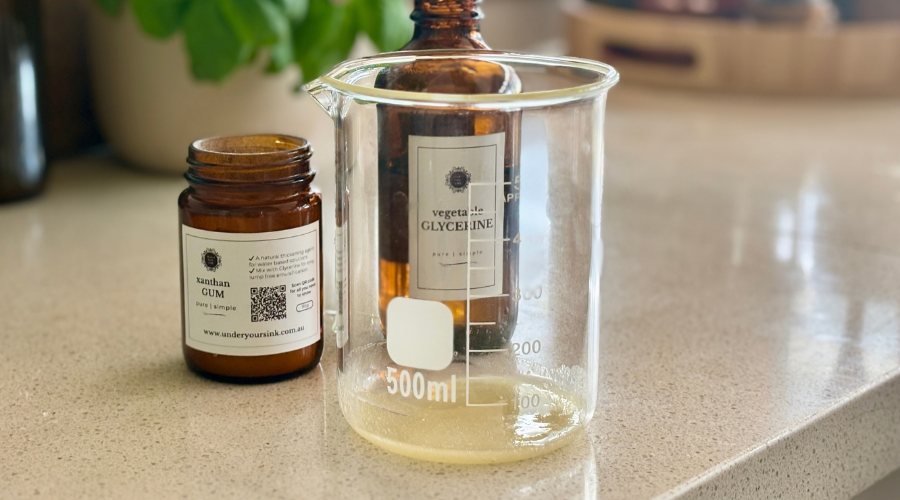
  1. In a jug or container, first make the thickening solution by combining the glycerine and xanthan gum until it is free of lumps and forms a gel-like paste.
  2. Add the water, essential oils (if using them) and then the citric acid, stirring until dissolved.
  3. Gently stir until you have the consistency you're after and use it right away. Note that the gel will continue to settle and thicken slightly over the next hour.

Good to know

How to use it

Vertical surfaces & build-up
Squeeze or spread the gel onto the area. Leave to sit for 3–5 minutes so the acid can dissolve mineral build-up. Scrub with a stiff brush, then rinse with hot water.

Tip for spreading the gel: an old squeeze bottle works a treat — you can even melt the nozzle very slightly to bend it into a shape that reaches under the toilet rim.

Using vinegar instead

Instead of making a citric acid solution, you can thicken undiluted vinegar the same way, using the glycerine and xanthan gum paste. Citric Acid is a no-smell alternative that creates a similar acidic environment.

Avoid

Care: Do not use on marble or porous surfaces as it can etch and damage stone. Always test patch up unsure.

Never mix this with other cleaning products like bleach, or alkali ingredients like washing soda or soap.

Why this works

Citric acid
A mild acid that dissolves mineral deposits — soap scum, limescale and hard water build-up don't respond to scrubbing, but they dissolve readily in an acidic solution.

Xanthan gum
A natural thickener that turns the solution into a gel, so it clings to vertical surfaces and under the rim instead of running straight off.

Glycerine
Helps the xanthan gum blend in smoothly without clumping, and keeps the gel from separating as it sits.

Tips for best use

If the glass or surface has visible grime, fingerprints, residue, or a greasy film, an acidic spray or gel on its own won't give good results. That layer needs to be removed first.

Clean the surface with a multi-purpose spray or paste first. Once the glass is clean, follow with this acidic solution as a finishing step. This two-step approach prevents streaking and stops residue from being spread around the surface.

See the multi-purpose recipes suited for dirt and grime removal: