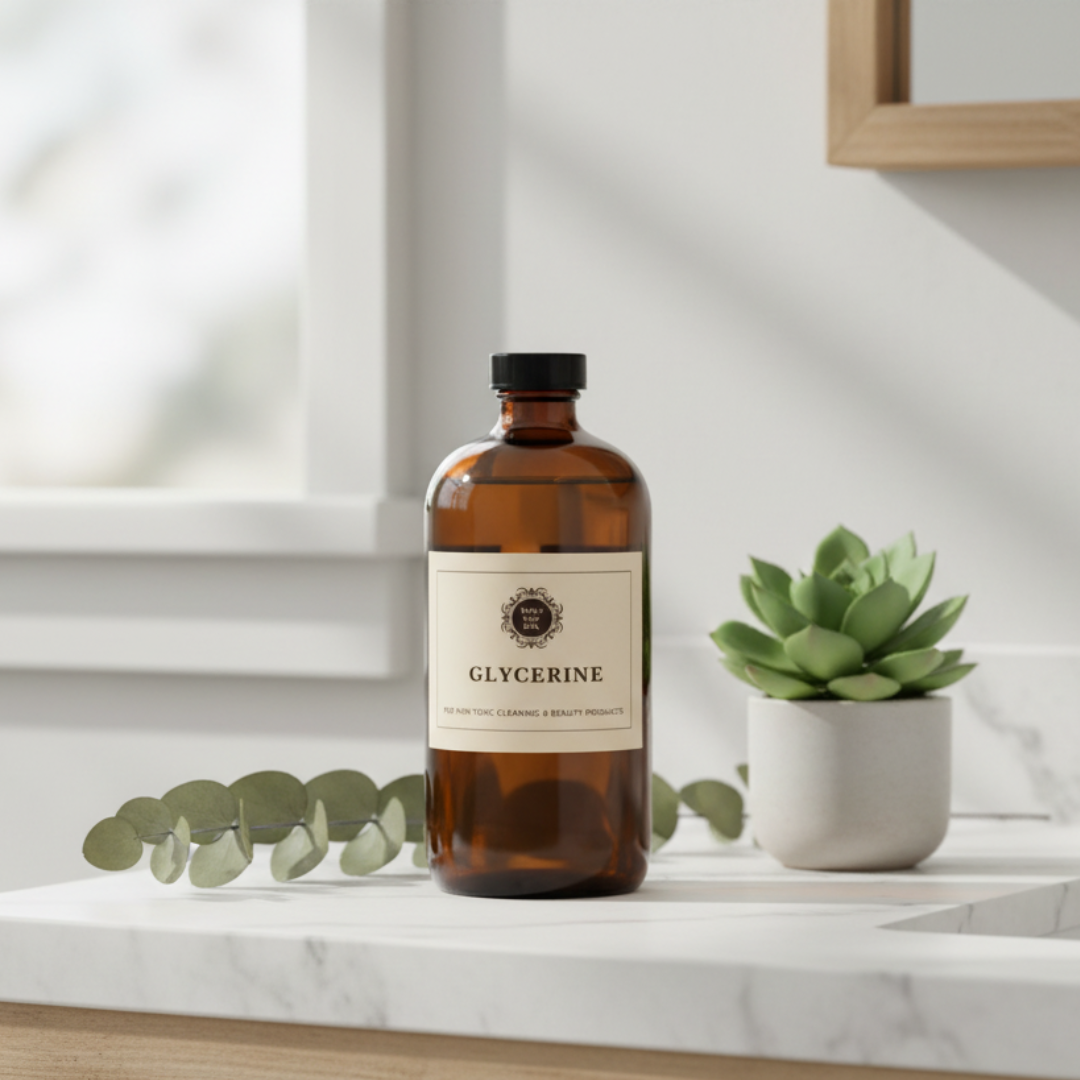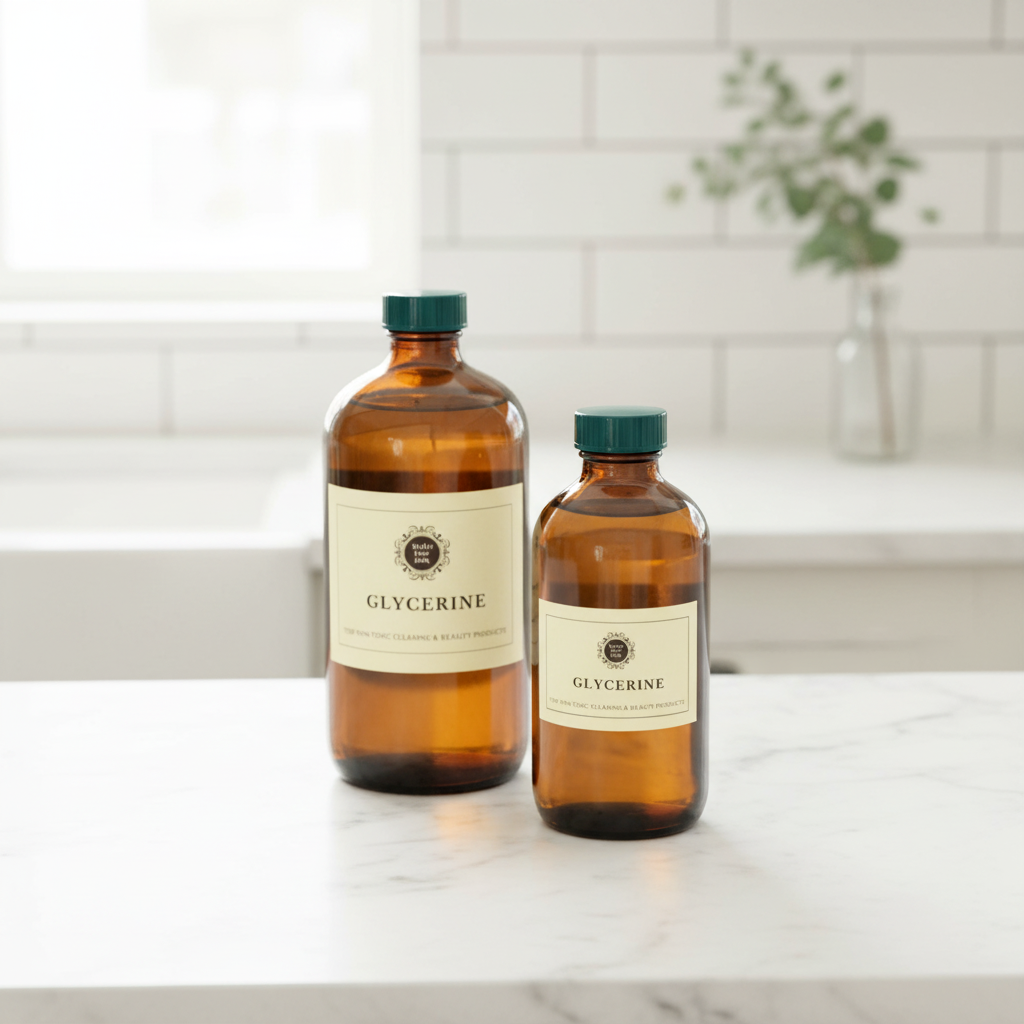

Glycerine is one of those behind-the-scenes ingredients that quietly improves your DIY recipes. It doesn't do the cleaning itself, but it helps products look better, feel nicer, and behave the way you expect them to.
What is it
Glycerine (also known as glycerol) is a clear, odourless liquid with a slightly syrupy consistency. It's naturally derived, mixes easily with water, and has been used in personal care and cosmetic formulations for well over a century.
It's one of the most widely used ingredients across skincare, pharmaceuticals, food, and cleaning products, which says something about how versatile and well-understood it is.
In DIY recipes, it's gentle and easy to work with, even for beginners.
How it's made
Vegetable glycerine is a byproduct of plant oil processing.
When plant oils undergo either soap making (saponification) or biodiesel production, glycerine is is released as a natural byproduc. It's then recovered from the production mixture, refined, and concentrated into the clear liquid you use in recipes.
Under Your Sink sources palm oil-free vegetable glycerine. The most common plant oil sources are coconut and sunflower, which avoids the deforestation concerns associated with palm oil supply chains.
What it's used for
Glycerine is used to support other ingredients rather than replace them.
In DIY cleaning and beauty products, it’s commonly used to:
- Help liquids stay blended instead of separating
- Improve the texture of hand wash, dish liquid, and gels
- Make soaps and washes feel gentler and less drying on hands
- Help essential oils sit more evenly in water-based mixes
- Works great with Xanthan Gum to thicken water based solutions without clumps
One of glycerine’s biggest benefits is that it acts as a bridge between oil and water. In plain terms, it helps ingredients that don’t naturally mix stay combined for longer, which is especially useful in sprays, washes, and gels.
Glycerine is also an excellent moisture retainer. It helps products hold onto moisture instead of drying out, which is why it’s so widely used in skincare and why it can make homemade cleaners more comfortable to use day to day.
It doesn’t increase cleaning power, but it absolutely improves how a product feels and performs.
Used in these recipes
Working with xanthan gum
If you're making any gel-based product, glycerine and xanthan gum work together as a pair.
Xanthan gum thickens water-based recipes into a gel, but it clumps badly when added directly to water. The fix is to mix xanthan gum into glycerine first. Because glycerine isn't water, the xanthan gum can't hydrate in it. The glycerine coats each particle and keeps them separated, so when the mixture hits water, the xanthan gum hydrates evenly and gives you a smooth result.
This is the technique behind all of the gel-based recipes in the Under Your Sink DIY Recipe Hub, and it's the reason glycerine appears in so many of them even at small quantities.
For more detail on this, the [xanthan gum guide](/blogs/about-the-ingredients/xanthan-gum) covers the technique in full.
Storage and shelf life
Glycerine is stable and has a long shelf life, typically two to three years when stored correctly.
Because it's hygroscopic, the main thing to avoid is leaving the container open or loosely sealed for extended periods. Glycerine will absorb moisture from the air, which can dilute it over time and affect how it performs in recipes.
Eco-friendly credentials
Vegetable glycerine is:
- Plant-derived
- Palm oil-free
- Biodegradable
It suits low-waste households and works well in products that go on your skin or down the drain.