Dishwashing Liquid

Dishwashing Liquid

🌱 A soap-based gel for everyday dishwashing and gentle grease removal


Dishwashing liquid is one of the hardest DIY swaps to get right - and I want to be upfront about that from the start. This is a pure soap-based solution, not a detergent. That means it behaves differently to most commercial dish liquids you’ll find at the supermarket - simply because it won’t foam aggressively.


What this dish liquid is

This is a soap-based gel, made by diluting liquid Castile soap and thickening it with xanthan gum.

It’s designed to lift everyday food residue and light grease so it can be rinsed away, not to overwhelm dishes with foam. The gel texture makes it easy to dispense, spread on a sponge, and control how much you use.


What it’s used for

This dish liquid works well for:

  • Everyday handwashing of dishes
  • Cutlery, plates, and glassware
  • Light grease and food residue

Because it’s built on a soap base, it’s also flexible. The same solution can be adapted for:

  • Hand wash
  • Body wash
  • Dog wash
  • General cleaning

Only the usage and dilution change - not the base recipe.


The best way to use it

This dish liquid works best when it’s used directly on a sponge, rather than added to a full sink of water. Soap performs more effectively when it’s applied to the surface that needs cleaning, instead of being diluted further.

If you prefer filling the sink, a solid coconut soap bar is often a better option. It’s old-school, but very effective, and easy to control.

Back to blog

Recipe & Instructions

Ingredients

  • 25–50 ml liquid Castile soap
  • ¼ teaspoon xanthan gum
  • 1 tablespoon vegetable glycerine
  • 450–475 ml distilled water or boiled, cooled tap water
  • 5–10 drops essential oils (optional)

Makes

500ml

Method

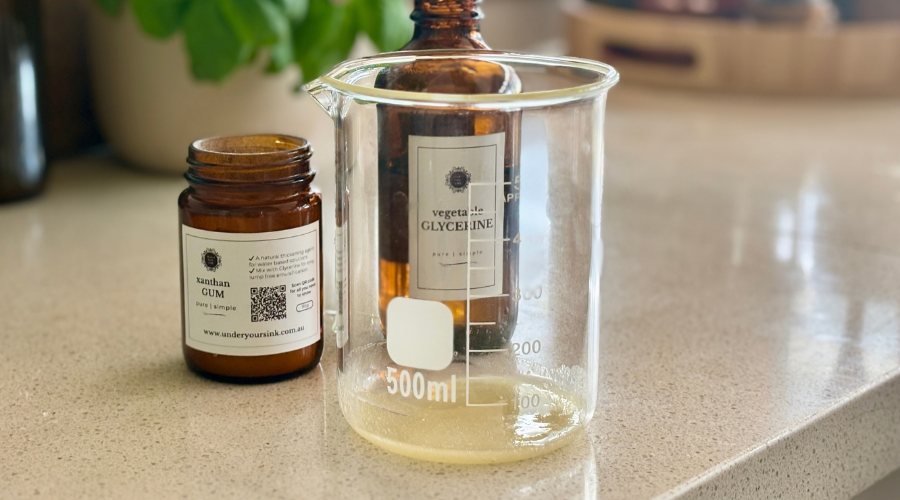
  1. Combine the glycerine and xanthan gum in a jug and mix until a smooth paste forms. This step prevents clumping later.
  2. Slowly add the liquid Castile soap and water while gently whisking. Take your time and avoid creating excess bubbles.
  3. Continue mixing until the solution thickens evenly.
  4. Add essential oils if using, then transfer to a pump bottle and label.

The gel will continue to settle and thicken slightly over the next hour.

Important use notes

  • This recipe is for handwashing only, do not use in a dishwasher
  • Rinse well with hot water for best results

Can I use this in a dishwasher?
No. Soap creates foam, and too much foam can damage a dishwasher. This recipe is designed for handwashing only. For machines, use a low-foam dishwasher powder instead.

Is it safe for hands and skin?
Yes. Castile soap is made from oils, water, and lye (which is what turns oils into soap). It’s commonly used in DIY body and household products. That said, some people are sensitive to soap in general. If that’s you, this recipe may not be suitable - and that’s okay.

Can I add other ingredients to make it stronger?
You can slightly increase the soap for more cleaning power, or add a small amount of coconut soap flakes. Avoid adding acids like vinegar or citric acid. Acid reacts with soap, causing it to turn cloudy, clumpy, or separate. Once that happens, the mixture is effectively ruined.

It feels a bit slimy, is that normal?
Yes. That feeling comes from olive oil–based soap and is completely normal. Hot water and a good rinse remove it easily. If you don’t enjoy that feel, coconut soap flakes are a good alternative. You can use them loose, pressed into a ball, or added to a soap swisher.

How long does it last once made?
Castile soap on its own has a long shelf life. Once diluted with water and without preservatives, the water becomes the limiting factor. I recommend making small batches and using them within a six months. Store in a clean, sealed bottle.

Is it septic-safe?
Yes. Castile soap is biodegradable and suitable for everyday household cleaning in septic systems. This is a cleaning product, not a septic treatment.