Everyday Soap Wash for People and Pets

Everyday Soap Wash for People and Pets

🌱 How one soap replaces multiple personal care products.


When you look closely, most personal care products are variations of the same base – water, surfactants, thickeners and fragrance.

We can achieve that using ingredients we can actually access: water, surfactants (soap), thickeners (xanthan gum) and fragrance (essential oils).

This system takes a similar but different approach. Instead of creating a new “product” for every use, it starts with one soap base, then adjusts how it’s used depending on the job.


A real soap base

Soap and detergent are not the same. Soap is made from fats, while detergents are made from synthetic ingredients. The foundation of this recipe is a pre-made liquid soap option called Castile soap, which:

  • Is made from olive oil, coconut oil, water and lye
  • Is biodegradable and low-tox
  • Cleans without synthetic foaming agents
  • Is suitable for skin, hair and pets when used correctly

What changes when making different “products” is dilution, texture and optional additions – not the soap itself. For example, you would leave out essential oils that aren’t suitable for pets in a dog wash, or include extra body-friendly ingredients like vitamin E or aloe for a body wash.

Castile soap works well because it:

  • Cleans without stripping oils
  • Rinses easily
  • Is gentle on skin and coat

Simple is best here.


Ways to use it

You can use this to replace various personal cleaning products, including:

  • Body Wash
  • Facial Cleaner
  • Shampoo
  • Dog Wash


Some tips and Variations

  • When used as shampoo,  like most commercial version - it can be drying. It's best followed with an acidic rinse. 
  • For pets, use the plain soap base, skip essential oils entirely and keep dilution gentle.

You can make a large batch of the base soap recipe, then portion it into pump bottles as needed, adding any extras depending on the use. I like to use 2 L repurposed demineralised water bottles for this.


Important notes

  • Always patch test for skin and pets
  • Avoid acids directly in soap products
  • Make small batches when diluting with water

Soap performs best when it stays uncomplicated.

Back to blog

Recipe & Instructions

Ingredients

  • 25–50 ml liquid Castile soap
  • ¼ teaspoon xanthan gum
  • 1 tablespoon vegetable glycerine
  • 450–475 ml distilled water or boiled, cooled tap water
  • 5–10 drops essential oils (optional)

Makes

500ml

Method

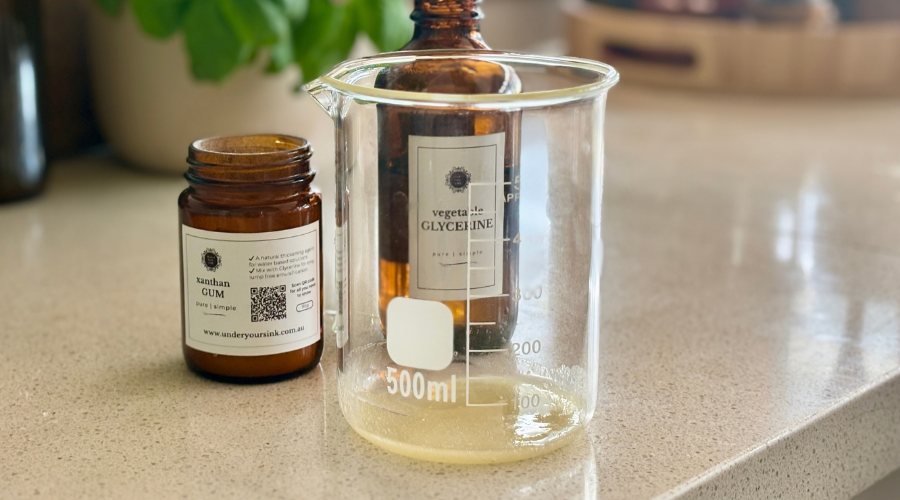
  1. Combine the glycerine and xanthan gum in a jug and mix until a smooth paste forms. This step prevents clumping later.
  2. Slowly add the liquid Castile soap and water while gently whisking. Take your time and avoid creating excess bubbles.
  3. Continue mixing until the solution thickens evenly.
  4. Add essential oils if using, then transfer to a pump bottle and label.

The gel will continue to settle and thicken slightly over the next hour.


Can I use this on babies or very sensitive skin?
Castile soap, especially unscented versions, is generally safe for babies and sensitive skin when heavily diluted. Always avoid the eyes, as soap can sting. Using a washcloth can help with control. Monitor skin for dryness and adjust dilution as needed. When it comes to babies and sensitive skin, dilute, dilute, dilute! Always patch test first to check for any reaction.

Why doesn’t this make much foam?
Foam is not a measure of cleaning power. Soap cleans by lifting and rinsing away dirt and oils, even with minimal lather. Many commercial products add foaming agents purely for appearance, not performance.

It’s too thin or too thick - what should I do?
If the wash is too thick, dilute with a small amount of water and mix gently. If it’s too thin, allow it to rest for an hour, as the gel can continue to thicken over time. Texture can vary slightly depending on water temperature and ingredients.