
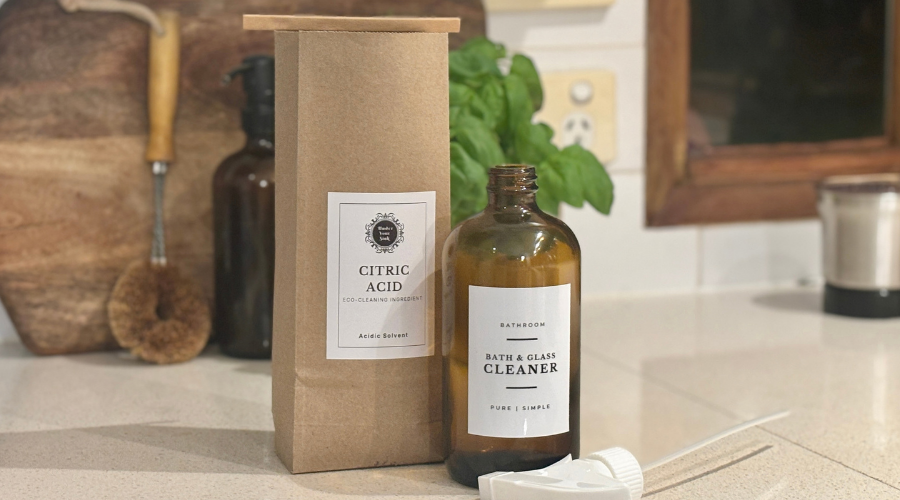
Citric Acid Spray

GREEN CLEANING RECIPE


Your no-smell alternative to cleaning with vinegar, reach for this to tackle hard water stains and soap residue.

Using vinegar as a cleaning spray is well known and common practice, however diluting a tiny bit of citric acid in water does the same job - without the smell!

In most cases this spray is the second step in the cleaning process, after 'dirt and grime' has been removed with a soap or alkali based cleaner.

Use it for:

  • Shining windows, glass and mirrors
  • Removing limescale, calcium and mineral deposits in showers and toilets. That's the crusty white stuff that appears on your shower screens and on tapware)
  • To remove soap scum in the bathroom
  • To remove rust

This spray solution can also be turned into a thicker gel solution, perfect for when more contact time is required and for vertical surfaces like the shower or toilet.

Care: Do not use on marble or porous surfaces as it can etch and damage stone. Always test patch up unsure.
Back to blog

The Recipe

Ingredient(s)

  • Citric Acid
    1/2 tablespoon (7 grams)
  • Water
    Top with water to make 500ml. Tap or pre-boiled water is fine. If you have hard water, use distilled or demineralised water.

What to do

  1. Add 1/2 tablespoon (or heaped teaspoon) of citric acid to a 500 mL spray bottle and top up with water.
  2. Replace the spray trigger and gently tip the bottle a few times to combine. The small amount of citric acid will dissolve in the water.

Good to know

Can I use vinegar instead?

Yes — diluted or undiluted vinegar works too.

The citric acid creates the same pH and acidic environment as vinegar and is a lot easy to store. If used just for this purpose, a small 750 gram bag of citric acid would make at least 40 litres of spray!

Why this works

Citric acid
A mild acid that dissolves mineral deposits and neutralises soapy, alkaline residue — the two things that cause streaking on glass and cloudiness on shower screens.

Tips for best use

If the glass or surface has visible grime, fingerprints, residue, or a greasy film, an acidic spray on its own won't give good results. That layer needs to be removed first.

Clean the surface with a multi-purpose spray or paste first. Once the glass is clean, follow with this acidic window and glass spray as a finishing step. This two-step approach prevents streaking and stops residue from being spread around the surface.

See the multi-purpose recipes suited for dirt and grime removal:

Shop what you need, all in one spot.