About Coconut Soap Flakes
Analisa Malone
Castile soap is the liquid soap in the kit, coconut soap flakes are the dry soap.
What are they
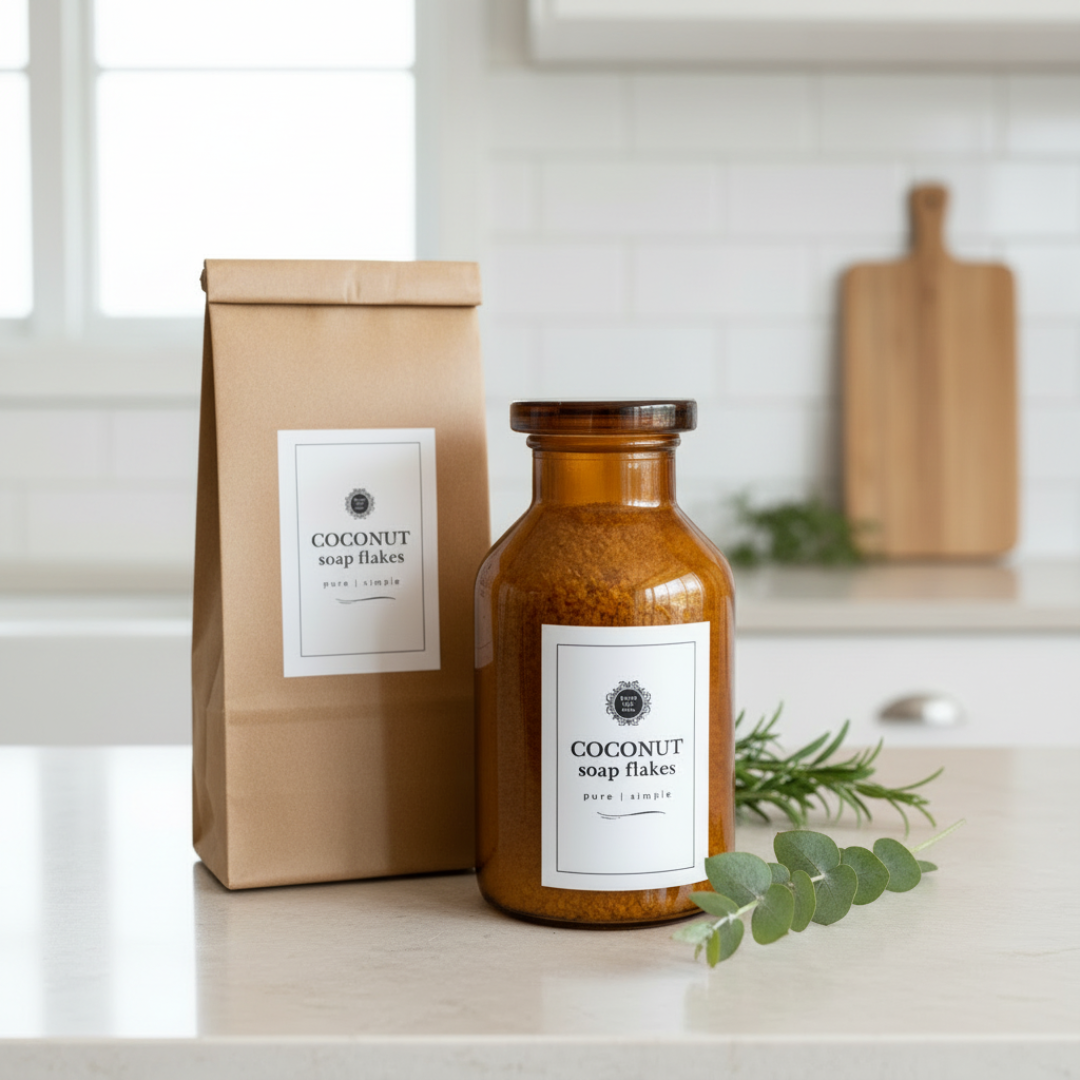
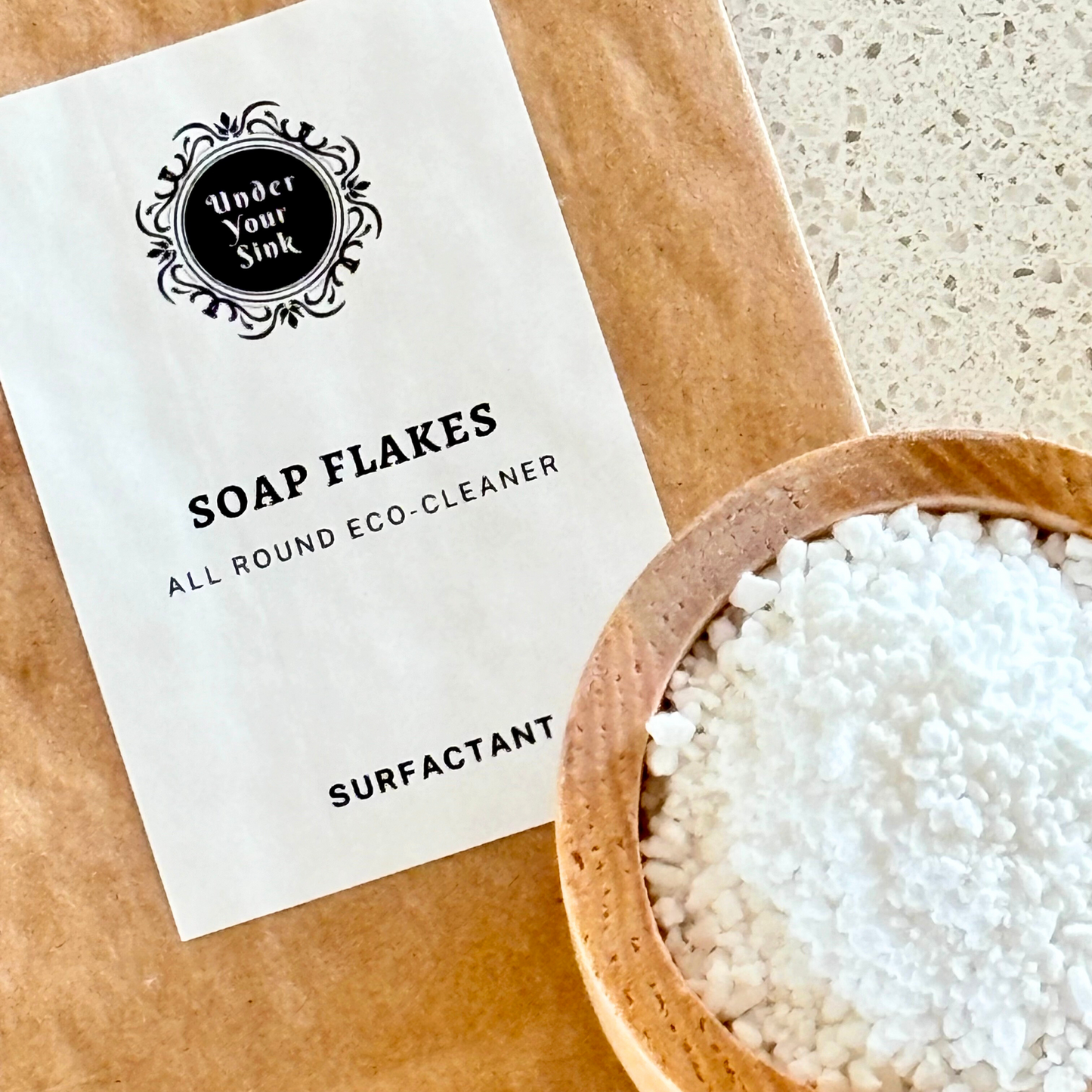
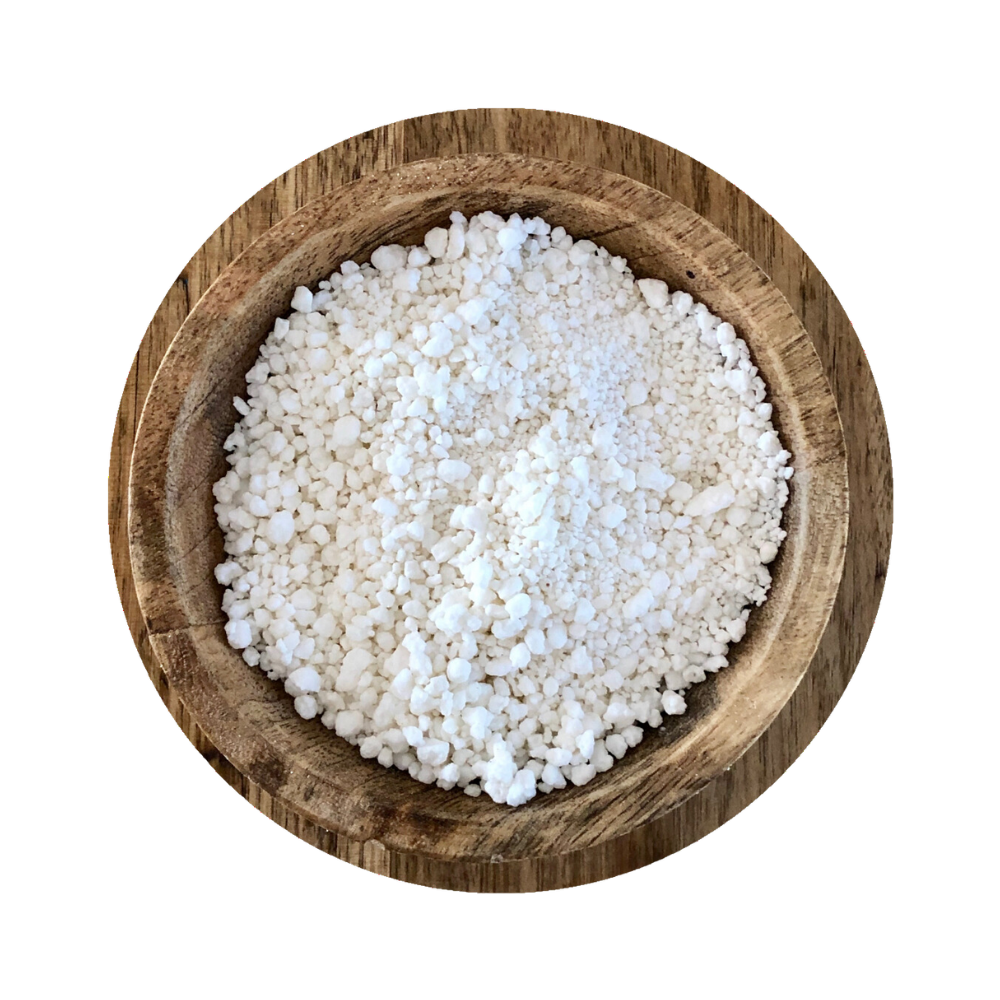
Coconut soap flakes are tru, pure hard soap, They look like fine white shavings, somewhere between grated parmesan and coarse salt. They bring the cleaning power of pure soap into a format that mixes with other dry ingredients, dissolves on contact with water, and stores neatly in a jar.
The version we stock at Under Your Sink is made from organic coconut oil.
How they are made
Made from only three ingredients: organic coconut oil, water and lye. Coconut soap flakes are produced the same way as any true soap, through saponification. Coconut oil and water are combined with sodium hydroxide, which triggers a chemical reaction that converts the fats into soap and glycerine.
The choice of alkali determines the form of the final soap:
- Sodium hydroxide (NaOH) produces a hard soap.
- Potassium hydroxide (KOH) produces a soft or liquid soap.
No lye remains in the finished product. Saponification consumes the sodium hydroxide entirely. The result is soap, glycerine and nothing else. Both coconut soap flakes and liquid Castile soap are both true soaps made by the same fundamental process, they just use different alkalis, producing different forms.
How they clean
Coconut soap flakes are a surfactant, and they work the same way as any soap.
Soap molecules have two distinct ends: one attracted to water, one attracted to oils. When soap meets a greasy surface in the presence of water, the oil-loving ends cluster around the grease while the water-loving ends face outward. These clusters (called micelles) lift the grease off the surface and hold it suspended in water so it can be rinsed away.
Why coconut oil produces a stronger soap.
Not all soaps clean equally, and the oil used matters. Coconut oil has a high content of lauric acid which is an exceptionally effective surfactant with strong lather and excellent grease-cutting ability.
This is why coconut soap cleans more aggressively than olive oil soap. It also explains why it is better suited to cleaning tasks than daily skin use, the same properties that cut through laundry soils and kitchen grease can strip the skin's natural oils with repeated use.
Some practical tips
Avoiding soap scum: Like all true soaps, coconut soap flakes can form soap scum in hard water. Calcium and magnesium ions in hard water react with soap to produce the grey residue that can build up on laundry or surfaces. This is why laundry recipes that use soap flakes often include washing soda or borax: they soften the water by binding to those mineral ions before they interfere with the soap.
Do not mix with acids: Mixing soap directly with vinegar, citric acid or other acids undoes the saponification. The soap breaks back into oil and the acid, producing an unpleasant curdled mess.
They need warm water: Soap flakes dissolve best in warm to hot water. In cool water they can clump or leave residue. In laundry, using a warm wash or pre-dissolving the powder makes a difference. This is normal soap behaviour, not a flaw.
Used in the following recipes
Add it to water to make a soapy solution that can clean cars, windows, outdoor areas.
Storage and shelf life
Coconut soap flakes are one of the easiest ingredients in the kit to store. Keep them in a sealed, airtight container in a cool, dry location and they will last indefinitely.
Moisture is the main concern. Humidity can cause the flakes to clump together. If they have clumped, break them up and use as normal, the effectiveness is not reduced.
History
Soap flakes as a consumer product have a long history.
In 1899, Lever Brothers (now Unilever) launched Lux soap flakes, thin shavings of pure soap sold specifically for laundry and delicate fabrics. The product was a direct response to the problem of grating household soap bars by hand, which most people were doing at the time. By putting the soap in ready-to-use flake form, Lever Brothers made the process far more convenient.
Soap flakes were the dominant laundry product through the first half of the 20th century. Before synthetic detergents existed, they were what most households used to wash clothes.
The shift came after World War II. The petrochemical industry had expanded significantly during the war, and synthetic detergents which are cheaper to produce, more stable in hard water, and heavily marketed, quickly overtook soap in the laundry market through the 1950s and 60s. By the 1970s, synthetic detergent powders had largely replaced soap flakes in mainstream supermarkets.
Coconut oil became a preferred base for commercial soap flakes because of its specific fatty acid profile. It produces a harder, whiter soap than tallow (rendered animal fat) with better lather and a cleaner smell. As awareness of synthetic detergent ingredients grew from the 1980s onward, coconut soap flakes found a new audience in people looking to return to simpler, plant-based cleaning products.
Eco credentials
Coconut soap flakes have a straightforward environmental profile.
It biodegrades readily in water and soil and does not persist in the environment or accumulate in aquatic organisms the way that many synthetic surfactants can.
The product is plant-based, vegan-friendly, and free from synthetic additives. The organic coconut oil source means the raw material is grown without synthetic pesticides or fertilisers.
The retained glycerine means no additional industrial processing to extract and sell it separately, the whole product of saponification stays in the soap.
Because soap flakes are a concentrated dry ingredient, a small quantity goes a long way.