
Borax is one of those ingredients that generates more debate than it deserves.
Used correctly, it is a straightforward, effective cleaning ingredient with a longer history of household use than almost anything else in the cupboard. The confusion mostly comes from one of two things: it gets mixed up with boric acid (which is a different compound), or people encounter alarming-sounding studies without the context to understand what those studies actually show.
This guide covers both the chemistry and the controversy, so you can make an informed decision rather than a fear-based one.
What it is
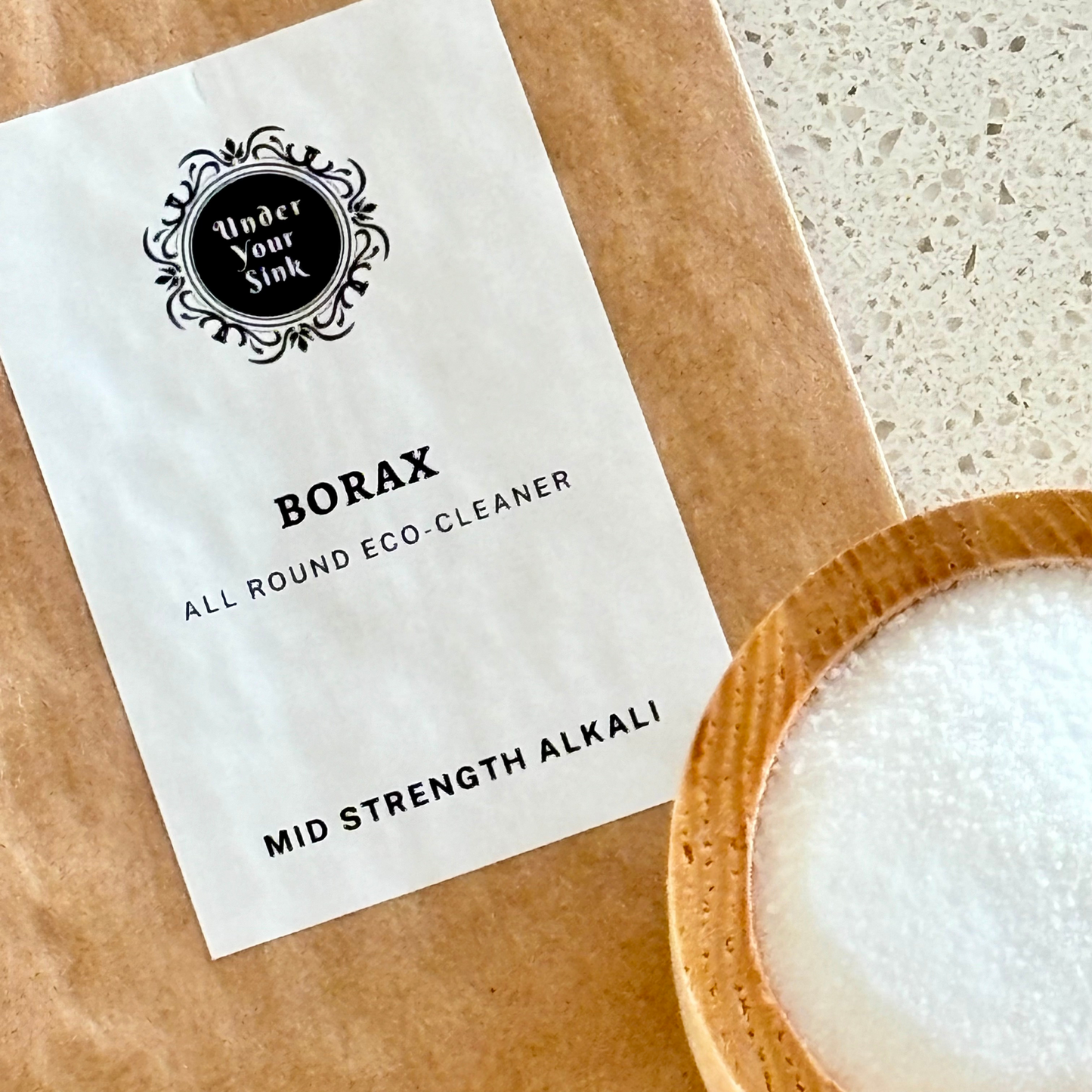
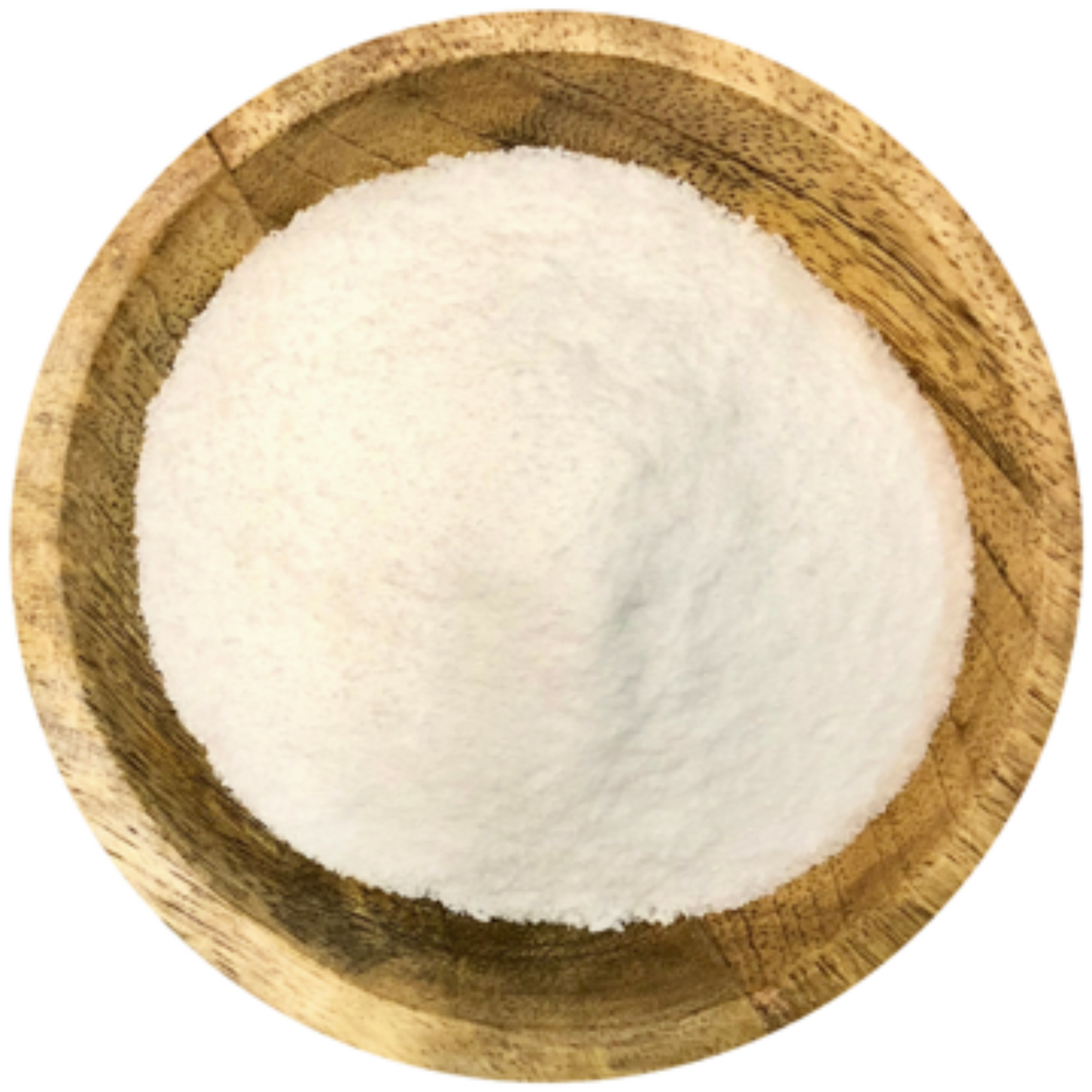
It is a naturally occurring mineral salt. It forms in dry lake beds where boron-rich water has evaporated over long periods, leaving behind white crystalline deposits. These deposits are mined and refined into the powder used in cleaning.
Borax has a pH of around 9.5 in solution, which puts it firmly in the mildly alkaline range. Stronger than bicarb soda but noticeably gentler than washing soda.
Borax is not boric acid. This distinction matters and comes up repeatedly in safety discussions (more on that in the safety section below.)
Borax is the common name for sodium tetraborate, sometimes written as sodium borate. Its chemical formula is Na₂B₄O₇·10H₂O, the ·10H₂O part means it naturally holds ten water molecules in its crystal structure, which is why it looks slightly different from anhydrous powders.
The science of how it cleans
Borax works through a combination of mechanisms, which is part of why it shows up in so many different recipes.
Alkalinity.: At pH 9.5, borax creates an alkaline environment that helps break down grease, oils and protein-based soils. It is not as aggressive as washing soda, but it is meaningfully stronger than bicarb and works on a wider range of grime.
It softens hard water: Hard water contains minerals like calcium and magnesium that interfere with the way soap and detergents work as they bind to these minerals instead of lifting dirt. Borax reacts with calcium and magnesium and locks them out of the water, leaving soap free to do its actual job. This is why so many laundry recipes include borax: it makes everything else work better, especially in hard water areas.
Antimicrobial and mould-inhibiting properties: Borax interfere with the cell metabolism of certain bacteria and fungi. This is why borax appears in toilet cleaning recipes and mould-control pastes. It does not sterilise surfaces the way a dedicated disinfectant would, but it does inhibit microbial growth in a way that bicarb and washing soda do not.
Boosting other ingredients: Borax makes soap, washing soda and coconut soap flakes work more effectively. In a recipe, it is often doing several jobs at once: softening the water, lifting grime and helping the other ingredients perform better. This is why a small amount goes further than you might expect.
Its relationship with bicarb and washing soda
These three are the alkaline trio. They look similar, show up in similar recipes, and cause more confusion than almost anything else in DIY cleaning.
The simplest way to understand them is by strength:
| Washing Soda | pH ~11 | Heavy grease, hard water, deep cleaning |
| Borax | pH ~9.5 | General cleaning, mould inhibition, laundry boosting |
| Bicarb Soda | pH ~8.3 | Gentle deodorising, light cleaning, baking |
Borax sits in the middle. Broader cleaning ability than bicarb, some antimicrobial properties, good for laundry and general cleaning. When bicarb is not enough but washing soda feels like overkill, borax is usually the right call.
Note: Often a mix of the three is a perfect solution along with soap as your surfactant
When to use it
Borax works best as part of a recipe rather than on its own. You will find it doing useful work across several areas of the home.
Laundry
- A core ingredient in homemade laundry powder where it works alongside washing soda and coconut soap flakes.
- Boosts cleaning and odour removal, particularly in hard water areas.
- Used as a laundry soak for whites and heavily soiled items.
Kitchen
- Can be added to dishwasher powder and tablet recipes, where it helps with cleaning performance and prevents build-up.
- Effective for cleaning and deodorising bins, dishcloths and mops.
Bathroom
- Used in cleaning pastes for grout and tiles, and in toilet cleaning recipes where its mild antimicrobial properties are useful.
Used in these recipes
- Multi-Purpose Cleaning Paste
- Laundry Washing Powder
- Dishwasher Powder
- Dishwasher Tablets
- Oven Cleaner
Why hot water helps
Borax dissolves and activates better in warm to hot water. Hot water helps it dissolve fully and evenly, which improves cleaning performance and reduces the chance of residue.
For laundry soaking, hot water makes a meaningful difference, particularly for whitening and odour removal. For general surface cleaning and recipes, warm water is fine.
Unlike sodium percarbonate, borax does not rely on heat to trigger a chemical reaction. The benefit of hot water is primarily better dissolution and the physical cleaning advantage of heat itself (it softens grease and loosens grime).
What you can use it on
- Most washable fabrics
- Ceramic and porcelain
- Grout and tiles
- Plastic containers and household items
- Stainless steel (
- Glass
- Toilet bowl and cistern
What to avoid
- Aluminium: reacts with alkaline solutions and causes pitting and discolouration
- Delicate fabrics: In fabric like silk and wool the alkalinity damages fibres
- Waxed or polished wood: strips wax and finish
- Fibreglass: can cause etching
- Painted surfaces: can strip or dull paint over time
-
Natural stone such as marble, travertine and limestone: alkaline solutions can damage stone surfaces over time (acidic cleaners are more commonly cited as the risk with stone, but repeated alkaline exposure can also cause issues
When in doubt, test a small hidden area first.
Warnings and safe use
Borax is a natural mineral used in household cleaning, but it still deserves sensible handling.
- Keep out of reach of children and pets
- Avoid inhaling the powder when measuring
- Wear gloves if mixing solutions by hand or using for extended periods
- Avoid contact with eyes, rinse immediately with water if this occurs
- Do not ingest
- Store clearly labelled, it looks similar to bicarb so don't use in cooking
Used as intended for household cleaning, borax is safe and effective. It has been used in household cleaning products for well over a century.
Storage and shelf life
Store borax in a sealed, airtight container in a cool, dry location. Moisture causes clumping. Unlike sodium percarbonate, borax does not degrade from moisture in the same way as it absorbs water into its crystal structure and can cake together, but its cleaning effectiveness is not significantly reduced.
If it has clumped, it can be broken up and used normally. Stored dry and sealed, borax has an indefinite shelf life.
Naturally sourced vs processed
Borax can be found naturally in mineral deposits left behind when ancient lakes evaporated. These deposits are mined, refined, and processed into the borax powder we use today. This is often referred to as naturally harvested borax because it starts as a mineral from the earth.
Borax can also be made synthetically by reacting boric acid with sodium carbonate. The end result is chemically very similar, but the source and process are different. Naturally harvested borax comes from mineral deposits, while synthetic borax is manufactured through a chemical reaction.
At Under Your Sink, we stock naturally mined borax.
Eco credentials
Borax breaks down into borate molecules in water, the same boron compounds that occur naturally in soil, water and plant tissue. Boron is an essential micronutrient for plants in trace quantities.
It is phosphate-free, chlorine-free, and does not accumulate in the environment in the way that synthetic cleaning chemicals can. It is generally considered safe for greywater systems and septic tanks at normal household concentrations.
One caveat worth knowing: boron in high concentrations can be toxic to plants. This is why you should not use large quantities of borax solution directly on garden beds or areas with sensitive vegetation. In normal household greywater volumes, this is not a concern, but it is worth being aware of if you are using large amounts.

History
Borax has been in use for cleaning, metallurgy and glassmaking for thousands of years.
Early trade routes brought borax from dry lake deposits in Tibet and Persia to Europe, where it was valued as a flux in metalworking and as a preservative. The word "borax" derives from the Arabic and Persian words for the mineral.
In the 19th century, large borax deposits were discovered in the Nevada and California deserts. The most famous of these were in Death Valley, where borax was mined from the 1870s and transported out via teams of 20 mules across harsh desert terrain, giving rise to the still-familiar 20 Mule Team Borax brand, established in 1891.
California's Boron mine, which opened in 1927, became one of the largest borax mines in the world and remains in operation today. Turkey's boron deposits, particularly in the Kütahya region, are now the world's largest known reserves and supply a significant portion of global production.
Borax entered the mainstream household cleaning market in the late 19th and early 20th century and has been a staple ingredient in laundry powders and cleaning products ever since.
The safety debates
This is where borax gets complicated and where it is worth taking some time, because the conversation online is messy.
Borax vs boric acid: not the same thing
The most important thing to understand about borax safety concerns is that many of them apply to boric acid, not borax.
Boric acid (H₃BO₃) is produced by treating borax with a mineral acid. It is a more reactive compound used as a pesticide, antiseptic and in other industrial applications. The two compounds contain the same element (boron), but they are chemically different, with different toxicity profiles.
Studies involving boric acid are often cited in discussions about borax. This matters enormously for context. When you read a headline that says "boron compound linked to X", check whether the study used boric acid or borax, they are not interchangeable.
The fertility and reproductive studies
This is the part people often worry about, so it is worth explaining clearly.
Some studies have shown that very high doses of boron compounds can affect fertility and reproduction in animals. These studies are real and should not be dismissed. However, many of the commonly cited studies used boric acid, not household borax. Boric acid and borax are related boron compounds, but they are not the same product.
The bigger issue is also the type of exposure. In these studies, animals were fed large amounts of boron compounds every day, over many weeks or months. In some cases, the amount was high enough to make up almost 1% of their total diet. That is very different from using borax in laundry, toilet cleaning, or a diluted household cleaning recipe.
The concern comes from repeated, high-dose ingestion. Household cleaning use involves much smaller amounts, used externally, and not eaten. Studies looking at workers exposed to boron over long periods have also not shown the same reproductive effects seen in high-dose animal feeding studies.
So the practical conclusion is this: borax is not something to eat, inhale, or handle carelessly, but the fertility concerns are based on extreme exposure conditions. They do not reflect normal household cleaning use when borax is used as intended.
The drinking trend
In 2023, a social media trend emerged (primarily on TikTok) encouraging people to dissolve borax in water and drink it. Claims included weight loss, joint pain relief, "detox", hormone balancing and a range of other health benefits.
There is no credible scientific evidence supporting any of these claims. None.
Borax is a cleaning product. It is not a dietary supplement, a medicine, or safe for ingestion in any meaningful quantity. Drinking borax can cause nausea, vomiting, kidney damage and, at sufficient doses, serious harm.
The FDA, Safe Work Australia, and multiple poison control organisations issued warnings against the trend. In July 2023, health authorities in multiple countries were actively working to have the content removed from platforms.
If you encounter this content online, treat it as you would any other dangerous misinformation. The fact that an ingredient has a long history of safe cleaning use does not make it safe to eat.
The bottom line on safety
Borax is safe for household cleaning when used as intended.
The concerns that circulate online are mostly based on: (a) confusion between borax and boric acid, (b) animal studies conducted at doses with no relevance to cleaning use, or (c) genuinely harmful misuse (the drinking trend) that has nothing to do with cleaning.
Used to wash laundry, clean tiles or make a dishwasher tablet borax is an effective, well-understood ingredient with a long documented history of safe use. Treat it with the same common sense you would any other cleaning ingredient: label it, store it out of reach of children and pets, wear gloves for extended handling, and do not eat it.