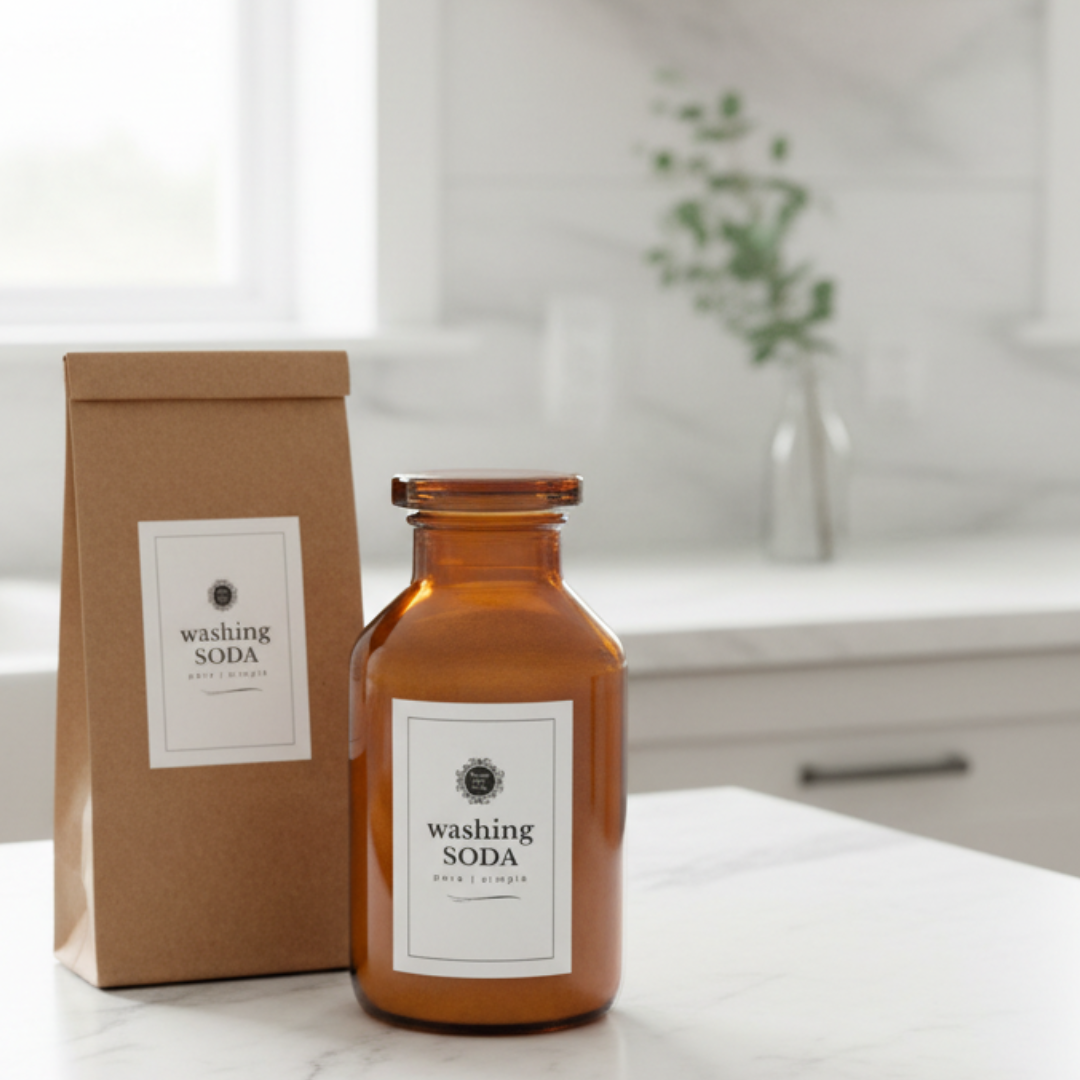

If you have ever checked the ingredient list on commercial laundry powders, dishwasher tablets or heavy-duty cleaners, you will often see sodium carbonate (washing soda) listed. It has been in cleaning products for generations because it performs some very important cleaning functions.
What it is
Washing soda is also known as sodium carbonate, and soda ash in the USA.
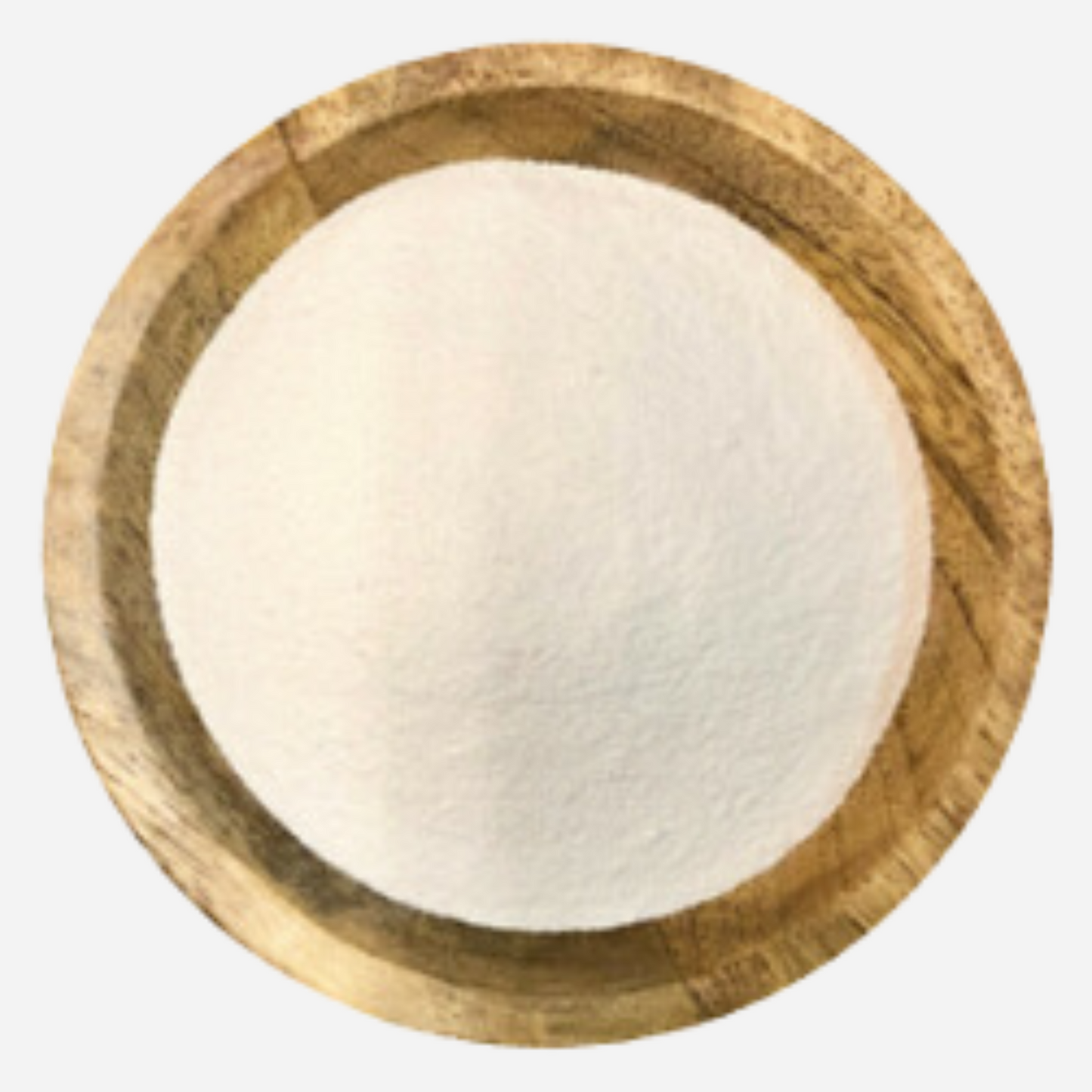
It is a white granular powder with a slightly gritty texture, noticeably different from the fine, silky feel of bicarb soda. It occurs naturally as a mineral and has been mined and used by humans for thousands of years.
The science of how it cleans
Washing soda is highly alkaline, sitting at around pH 11 in solution. That level of alkalinity does three distinct things:
It breaks down grease: It creates a strongly alkaline environment where fats and oils undergo a process called saponification. In practical terms, this means grease dissolves instead of sitting stubbornly on a surface. This is why washing soda is so effective on kitchen grease, laundry stains and heavy grime.
It softens hard water: Hard water contains minerals like calcium and magnesium that interfere with the way soap and detergents work as they bind to these minerals instead of lifting dirt. Washing soda reacts with calcium and magnesium and locks them out of the water, leaving soap free to do its actual job. This is why so many laundry recipes include washing soda: it makes everything else work better, especially in hard water areas.
It lifts and suspends dirt: The alkaline environment helps break the bond between grime and surfaces and keeps particles suspended in the wash water so they can be rinsed away.
Its relationship with bicarb and borax
These three white powders cause more confusion than almost anything else in DIY cleaning. They look alike, they are all alkaline, and they all show up in similar recipes -- but they are not interchangeable.
The simplest way to think about them is by strength:
| Washing Soda | pH ~11 | Heavy grease, hard water, deep cleaning |
| Borax | pH ~9.5 | General cleaning, mould inhibition, laundry boosting |
| Bicarb Soda | pH ~8.3 | Gentle deodorising, light cleaning, baking |
Washing soda is the strongest of the three. It is not gentle. It is the ingredient you reach for when there is actual grease, hard water build-up or heavy grime to deal with. In recipes, it provides the alkaline backbone that makes other ingredients perform better.
Note: Often a mix of the three is a perfect solution along with soap as your surfactant
When to use it
Washing soda shows up across a wide range of cleaning jobs, usually as a key ingredient in a recipe rather than used straight.
Laundry
- Boosts laundry powder in hard water areas
- Helps remove tough stains and grease
- Part of homemade laundry powder recipes.
Dishwashing
- A core ingredient in dishwasher powder and tablet recipes, where it provides alkalinity and water-softening action.
Kitchen cleaning
- Part of the cleaning paste for heavy grease and oven cleaning.
- Effective in degreasing soaks for pots, pans and oven racks.
General hard surfaces
- Floors, tiles and general surface cleaning where stronger alkalinity is needed.
Used in these DIY recipes
- Multi-Purpose Cleaning Paste
- Laundry Washing Powder
- Dishwasher Powder
- Dishwasher Tablets
- Oven Cleaner
Why hot water helps
Washing soda dissolves and activates best in warm to hot water. Hot water helps it dissolve fully and spread evenly, which improves cleaning performance and reduces the chance of residue being left on surfaces or fabrics.
For soaking jobs (pots, pans, oven racks) hot water makes a meaningful difference. For general laundry use, warm water is usually fine.
Unlike sodium percarbonate, washing soda does not rely on heat to release a chemical reaction. But dissolving it properly in hot water gives you better, more consistent results.

What you can use it on
- Most washable fabrics
- Hard floor surfaces such as tiles and sealed timber
- Kitchen surfaces, sinks and stovetops
- Ceramic and porcelain
- Grout and tiles
- Plastic containers and general household items
- Stainless steel
What to avoid
Washing soda is strong. Used on the wrong surfaces, it will cause damage.
- Aluminium: reacts with alkaline solutions and causes pitting and discolouration
- Delicate fabrics: In fabric like silk and wool the alkalinity damages fibres
- Waxed or polished wood: strips wax and finish
- Fibreglass: can cause etching
- Painted surfaces: can strip or dull paint over time
-
Natural stone such as marble, travertine and limestone: alkaline solutions can damage stone surfaces over time (acidic cleaners are more commonly cited as the risk with stone, but repeated alkaline exposure can also cause issues
When in doubt, test a small hidden area first.
Warnings and safe use
Washing soda is safe in household use but deserves some respect, particularly in concentrated form.
- Avoid inhaling the powder
- Wear gloves if you have sensitive skin or are mixing solutions by hand
- Avoid contact with eyes, rinse thoroughly with water if this occurs
- Keep out of reach of children and pets
- Do not confuse it with bicarb soda, they are different strengths and not interchangeable in recipes, not to be used for cooking.
It is not classified as hazardous in normal household use, but it is an irritant at higher concentrations.
Synthetic vs naturally sourced
This is one of the more interesting questions in DIY cleaning, and it is worth understanding.
Naturally sourced washing soda is processed from trona ore, a naturally occurring mineral found in large deposits, most notably in Wyoming in the United States and in Turkey. Trona is mined, then processed into sodium carbonate. This route is generally considered to have a lower environmental footprint because it requires less energy and fewer chemical inputs than the synthetic alternative.
Synthetic washing soda is produced via the Solvay process, by combining salt, ammonia, limestone and CO2 in a chemical reaction that produces sodium bicarbonate, which is then heated to form sodium carbonate. .
From a cleaning perspective, both are chemically identical, the same Na2CO3 regardless of where it came from. The difference is in sourcing and production footprint. Where possible, naturally sourced washing soda from trona is the more sustainable option.
At Under Your Sink, we stock naturally sourced washing soda
Eco credentials
Washing soda breaks down into sodium and carbonate in water, both naturally occurring compounds that do not accumulate in the environment. It is biodegradable in typical household use, phosphate-free, and generally considered safe for grey-water systems and septic tanks at normal concentrations.
One of its less obvious environmental advantages is what it does to a recipe. By softening hard water and boosting the performance of other ingredients, washing soda means you need less of everything to get the same result. Fewer products, smaller quantities, less packaging.
That is not a marketing claim, it is just how chemistry works.
Other industrial uses
Washing soda has many applications outside of cleaning for the home.
- Detergent manufacturing
- Glass manufacturing
- Paper and pulp processing
- Textile processing
- pH adjustment
- Laboratory uses
History
Washing soda has one of the longer histories of any household cleaning ingredient.
Ancient Egyptians used natron (a naturally occurring mix of sodium carbonate and sodium bicarbonate found around dry lake beds) for mummification, glassmaking, cleaning and food preservation. Evidence of its use dates back more than 3,000 years.
In medieval Europe, wood ash (which contains potassium carbonate, a similar alkali) was commonly used for washing textiles and cleaning. The term "washing soda" reflects this long association with laundry.
The first industrial production of sodium carbonate came via the Leblanc process, developed in France in 1791. This is one of the earliest examples of industrial chemistry applied to a commercial problem. It was replaced in the late 19th century by the more efficient Solvay process, which is still used today.
Trona mining in Wyoming became significant from the 1940s and 1950s and now supplies a large portion of the world's natural soda ash.
The ingredient in the bag under your sink has been around, in various forms, for a very long time.
Storage and shelf life
Store washing soda in a sealed, airtight container in a dry location. Moisture is the main issue, it causes clumping and, if left long enough, can cause it to absorb water and partially convert back toward sodium bicarbonate, reducing its strength.
Kept dry and sealed, washing soda has an indefinite shelf life. If it has clumped but is not wet, it can usually be broken up and used normally. If it has gone soft or noticeably lost its gritty texture, it may have been exposed to moisture.
Keep it clearly labelled as it looks similar to bicarb and borax, and mixing them up in recipes matters.
Story time with Analisa
I made this video a long time ago when I was just getting started. Fair warning: there is swearing, and it is probably not 100% politically correct. But if you want to hear a story I discovered going down the washing soda rabbit hole, you might find it as interesting as I did.